
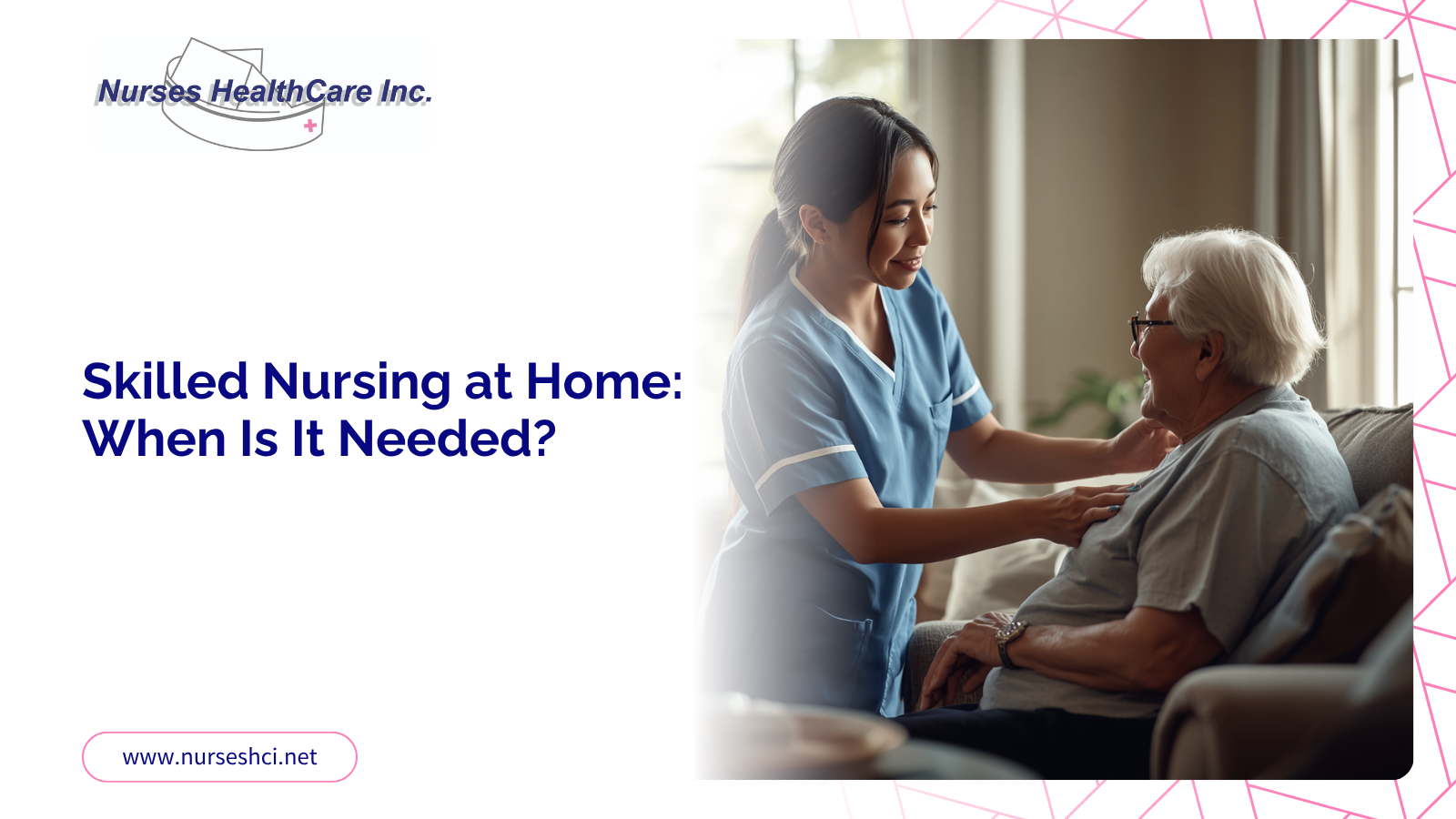
| Quick answer: Skilled nursing at home is needed when a person requires licensed medical care after a hospital stay, surgery, or during a complex illness, but does not need to remain in a facility. A registered nurse visits your home to monitor health, manage medications, and coordinate with your doctor. If a condition is medically complex but stable enough to manage at home, skilled nursing care is likely the right fit. |
Leaving the hospital is a relief. But for many patients, the days and weeks that follow require more medical support than family members can safely provide alone. That gap is exactly where skilled nursing at home fills a real need. It brings licensed clinical care directly to your door, so you can recover in a familiar place without sacrificing the medical oversight your condition demands.
We understand that choosing the right level of care can feel overwhelming, especially when you are already managing a diagnosis, a discharge plan, or a loved one’s health. This post walks you through the specific situations that call for skilled nursing at home, what the care actually looks like day to day, and how to take the first step. If you have questions at any point, you can reach NURSES HEALTHCARE, INC directly at (972) 481-1300.
What Skilled Nursing at Home Actually Means
Skilled nursing care is clinical care delivered by a licensed registered nurse or licensed practical nurse. It is not the same as companion care or personal attendant services. Skilled nurses perform tasks that require medical training and licensure, such as administering IV medications, managing a feeding tube, or assessing whether a wound is healing correctly.
At home, this care is scheduled around your needs. A nurse visits on a regular basis, documents your progress, communicates with your physician, and adjusts your care plan as your condition changes. The goal is to keep your recovery on track while reducing your risk of returning to the hospital.
Common Situations That Call for Skilled Nursing at Home
Skilled nursing at home is appropriate across a wide range of medical situations. It is not limited to elderly patients or those with terminal diagnoses. Anyone managing a condition that requires regular clinical monitoring may qualify.
Talking with your doctor or a home health agency early is the best way to confirm whether your situation meets the criteria. Below are the most common reasons people choose in-home skilled nursing care.
- Recovery after surgery, including joint replacement, cardiac procedures, or abdominal surgery
- Management of chronic conditions such as congestive heart failure, COPD, or diabetes with complications
- Monitoring and care of surgical incisions, pressure injuries, or diabetic ulcers that require professional clinical assessment
- IV therapy or injectable medications that cannot be safely self-administered
- Catheter or ostomy care requiring trained placement, monitoring, or instruction
- Post-stroke recovery when medical monitoring is needed alongside rehabilitation
What a Skilled Nurse Does During Each Visit
Each visit follows a clear clinical purpose. The nurse does not simply check in. They assess your vital signs, review your medications, inspect wounds or medical devices, and look for any warning signs that your condition may be changing. They document everything and report concerns to your doctor promptly.
Nurses also teach. A large part of skilled nursing at home involves helping you and your family understand your condition, recognize warning signs, and manage care between visits. That education reduces anxiety and helps prevent small problems from becoming emergencies.
- Assessment of blood pressure, heart rate, oxygen levels, and other vitals
- Inspection, cleaning, and dressing of wounds or surgical sites
- Medication review and injection administration
- Patient and family education on condition management
- Coordination with the treating physician and other care team members
How Skilled Nursing at Home Differs From Other Home Care Services
It helps to understand where skilled nursing fits within the broader range of home care options. Some people need hands-on personal care like bathing, dressing, and meal preparation. That is typically provided by a home health aide. Others may need help rebuilding strength or regaining movement, which is where physical therapy comes in. Skilled nursing serves a distinct clinical function alongside those services.
In many cases, a patient receives more than one type of care at the same time. A nurse may oversee medication management and clinical monitoring while a physical therapist helps with mobility. This coordinated approach gives you comprehensive support without requiring a facility stay.
How to Know If Your Loved One Qualifies for Skilled Nursing Care
Qualification typically depends on two factors. First, a physician must certify that skilled nursing care is medically necessary. Second, in most cases the patient must be considered homebound, meaning that leaving the home requires considerable effort due to their medical condition. This is general information, not advice. Confirm specific eligibility criteria with your physician and your insurance or Medicare plan.
If you are unsure whether your loved one qualifies, the most practical step is to call a home health agency and describe the situation. The team at NURSES HEALTHCARE, INC serves the Dallas, TX area and surrounding communities from our office at 1101 W Plano Pkwy, Suite 101, Plano, TX 75075. We can help you understand your options and connect you with the right care. Call us at (972) 481-1300 to get started.
Frequently Asked Questions
Is skilled nursing at home covered by Medicare?
Medicare Part A may cover skilled nursing care at home if a physician certifies the need and the patient meets homebound criteria. This is general information, not advice. Confirm your specific coverage details with your Medicare plan or a benefits counselor.
How often will a skilled nurse visit?
Visit frequency depends on your care plan and medical needs. Some patients receive daily visits right after a hospital discharge, while others may be seen two or three times per week as they stabilize.
Can skilled nursing at home replace a stay in a rehabilitation facility?
For many patients, yes. If your condition is medically stable and your home environment is safe, in-home skilled nursing can provide comparable clinical oversight with the added comfort of recovering in your own space. Your physician determines which setting is appropriate.
Who coordinates my care between nurse visits?
Your assigned nurse maintains contact with your treating physician and updates your care plan as needed. You and your family are always kept informed, and you can reach the agency directly with concerns between scheduled visits.
Does NURSES HEALTHCARE, INC serve areas outside of Dallas?
Yes. NURSES HEALTHCARE, INC serves a wide range of communities across the Dallas-Fort Worth area, including Plano, McKinney, Frisco, Garland, Richardson, and many surrounding cities. Visit the service areas page on the website to see the full list.